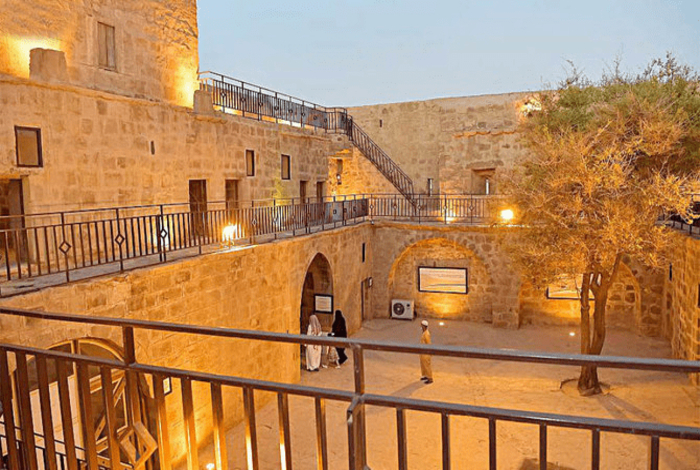
Tabuk Castle is located in the city of Tabuk, in the northwest of Saudi Arabia, and is considered one of the most prominent historical landmarks in the region. The castle is distinguished by its strategic location on the old route of the Levantine pilgrimage (the “Shami Hajj Route”), which made it a major stop where pilgrims coming from the Levant would rest on their way to Mecca.

It is believed that the castle dates back to the era of Caliph ʿUmar ibn al-Khaṭṭāb (may Allah be pleased with him). It was built to serve as a center for protecting pilgrims and travelers and to provide them with water and supplies. Over the centuries, the castle underwent several stages of restoration and reconstruction, particularly during the Ottoman and Saudi periods, until it took on its current form that combines historical authenticity with solid architectural structure.
The castle consists of two floors containing multiple rooms that were used as storerooms and guard quarters, in addition to an inner courtyard and a water well that provided travelers with drinking water. The castle is surrounded by a high wall with watchtowers, reflecting its defensive importance in the past.
Islamic history
Today, Tabuk Castle is one of the region’s most notable tourist attractions, drawing visitors and those interested in Islamic history and ancient monuments. It has been transformed into a historical museum that displays artifacts and documents reflecting the region’s history and its role in serving the Levantine pilgrimage route.
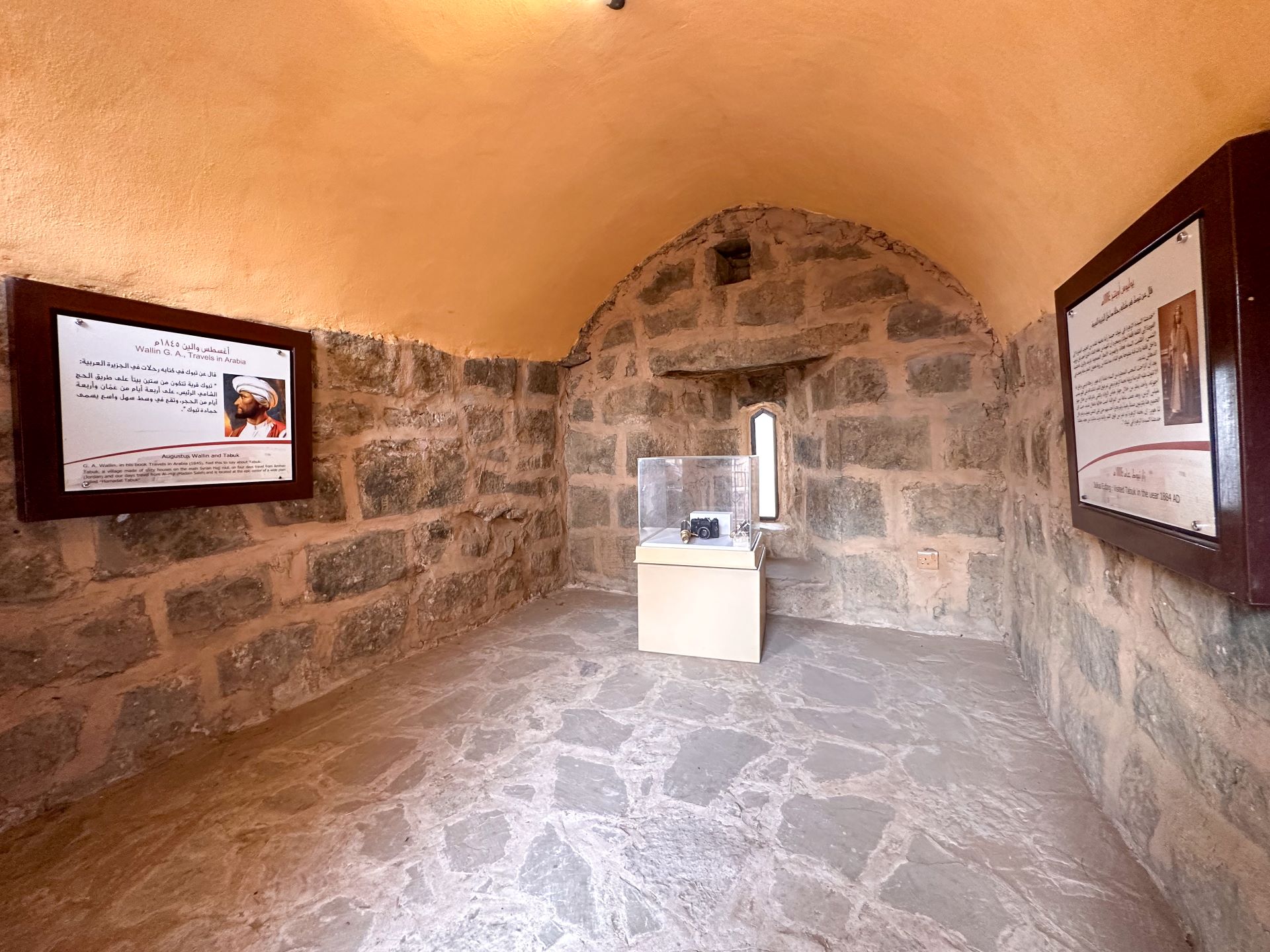
In short, Tabuk Castle embodies great historical and cultural value—it stands as a witness to the deep-rooted past and a testament to the Muslims’ long-standing concern for ensuring comfort and safety for pilgrims and travelers on their way to the Sacred House of Allah.


Related Topics :
Marwan Castle in Taif: Where History Meets Breathtaking Views
Riyadh Hosts Cultural Investment Conference 2025
Heritage Commission Organizes Stunning Activities at Bin Raqoush Palace in Al-Baha