

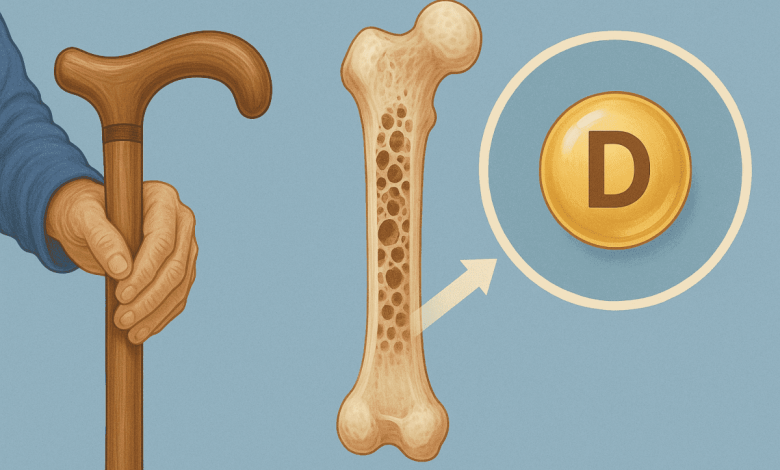
Reduced sunlight lowers the body’s production of vitamin D, while a blood test can identify deficiency and determine the appropriate replacement dose.
Endocrinologist Dr. Olga Vasyutkova has warned that vitamin D deficiency during winter does not only increase the risk of osteoporosis and fractures; it can also disrupt endocrine balance and raise the risk of autoimmune disorders and metabolic dysfunction.
She explained that reduced sun exposure in winter decreases the skin’s production of vitamin D, which is converted in the liver and kidneys into its active form, known as calcitriol. This metabolite interacts with receptors found in many organs, particularly bones, muscles, and the endocrine system, as well as the immune and nervous systems, affecting their functions.
“Vitamin D deficiency affects calcium absorption in the intestines, which can lead to osteoporosis and an increased risk of fractures,” Vasyutkova said. “Autoimmune thyroid diseases, particularly chronic autoimmune thyroiditis accompanied by hypothyroidism, are also often diagnosed in people with vitamin D deficiency.”

She added that vitamin D also affects tissue sensitivity to insulin and insulin production, making its level particularly important for people with type 2 diabetes, those with prediabetes, and individuals at risk of developing the disease.
Vasyutkova noted that vitamin D deficiency may lead to reduced endocrine function, although it does not usually require seasonal changes to a treatment plan.
Dietary Sources
Regarding dietary sources, she said that correcting a deficiency through food alone is difficult because most foods contain relatively low levels of the vitamin. Dietary sources are limited to a small number of products, most notably fatty fish such as salmon, herring, sardines, and tuna—including canned tuna in oil—as well as eggs, cheese, and beef liver.
To check vitamin D levels, a blood test measuring the concentration of 25-hydroxyvitamin D is recommended. Normal levels range from 30 to 50 nanograms per milliliter, while a value below 20 nanograms per milliliter indicates deficiency.

For treatment doses, doctors usually prescribe adults a daily preventive dose of 1,500 to 2,000 international units of cholecalciferol, also known as vitamin D3, throughout the year. People with obesity and older adults may require higher doses of up to 5,000 international units daily, depending on a physician’s assessment.
Vasyutkova stressed that diet alone is not enough to obtain sufficient vitamin D. She emphasized the need for a blood test to determine actual levels, with the appropriate dose determined by a doctor based on test results and each patient’s individual health condition.


