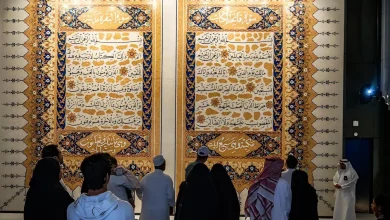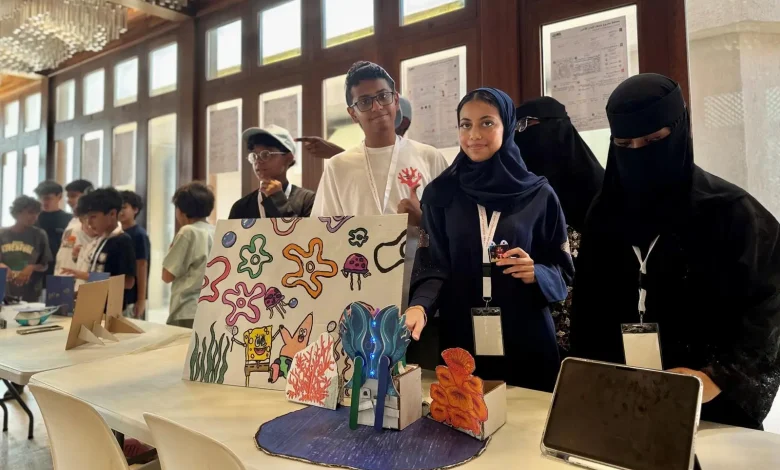
The Red Sea Museum in Historic Jeddah recently concluded its “Red Sea Lab” summer camp. The exciting event saw the enthusiastic participation of 25 children.
Consequently, these young minds presented five impressive projects and working prototypes. These innovative ideas actively applied science, technology, engineering, and mathematics (STEM). Ultimately, the children aimed to develop practical solutions for protecting coral reefs and reducing marine pollution.
The Final Challenge and Evaluation
The camp’s final challenge perfectly embodied the knowledge and skills acquired by the participants. Over five days, the children were carefully divided into five collaborative working groups. Subsequently, they transformed what they had learned into concrete projects. Furthermore, these projects were directly inspired by real environmental challenges related to the Red Sea.
Moreover, the projects were evaluated according to strict criteria. Judges looked closely at problem understanding, idea creativity, and overall prototype design. Additionally, they assessed the expected environmental impact. Finally, they evaluated the participants’ presentation and teamwork skills.
Winning Projects: Coral Reefs and Marine Robots
The “Sea Heritage” project proudly took first place. The winning team developed a highly advanced conceptual device. Specifically, this device senses when coral reefs need bacterial injections to support their treatment and growth.
Furthermore, the team designed a prototype of a specialized underwater robot. This robot is capable of examining the reefs and performing the injection instantly. Consequently, this brilliant idea perfectly combines modern technology with the urgent conservation of marine ecosystems.
Meanwhile, the “Divers” project secured second place. They presented a prototype of a robot that easily senses plastic waste. As a result, it actively contributes to collecting and recycling ocean debris.
Finally, the “Red Whale” project took third place. This team designed a robot dedicated solely to monitoring and removing marine waste. Therefore, it greatly contributes to reducing pollution and preserving the delicate marine environment.
Hands-On Experience with KAUST Experts
The creation of these five projects allowed participants to go through integrated development stages. First, they started with identifying the core problem and innovating a solution. Next, they moved on to actual prototype design. Finally, they ended the process by presenting the idea and evaluating its potential impact.
Additionally, the children presented their final projects to leading specialists and academics. These distinguished experts hailed from King Abdullah University of Science and Technology (KAUST).
Consequently, this provided the youth with a remarkable hands-on scientific experience. Furthermore, it helped them confidently discuss their ideas while developing vital presentation and communication skills.
A Five-Day Scientific Program
These impressive projects were the direct outcome of an intensive scientific program. The educational camp was held from August 25 to August 29.
During this time, the curriculum comprehensively covered the geological formation of the Red Sea. Moreover, it explored local biodiversity, coral reefs, ocean chemistry, and water quality. The students also learned extensively about the severe impacts of pollution and climate change.
Additionally, the program introduced modern technologies and underwater exploration techniques. Afterward, the children applied this new knowledge directly in their group projects. Ultimately, these early prototypes could potentially be developed further in the future.
Expanding the Museum’s Educational Mission
The “Red Sea Lab” perfectly reflects the Red Sea Museum’s strategic orientation. The institution aims to continuously expand its knowledge base and educational offerings.
Therefore, it actively connects youth with the marine environment through learning, experimentation, and innovation. Furthermore, the camp successfully transforms theoretical scientific knowledge into highly practical ideas.
Ultimately, this initiative greatly enhances public awareness. It powerfully reminds the next generation of the critical importance of protecting the Red Sea and its precious natural resources.
Related Topics:
Red Sea Museum Extends “Sunken Treasures” Exhibition in Historic Jeddah
Rare Coral Prayer Beads on Display in Red Sea Museum
Farasan Maritime Museum Celebrates 20 Years of Preserving Red Sea Heritage