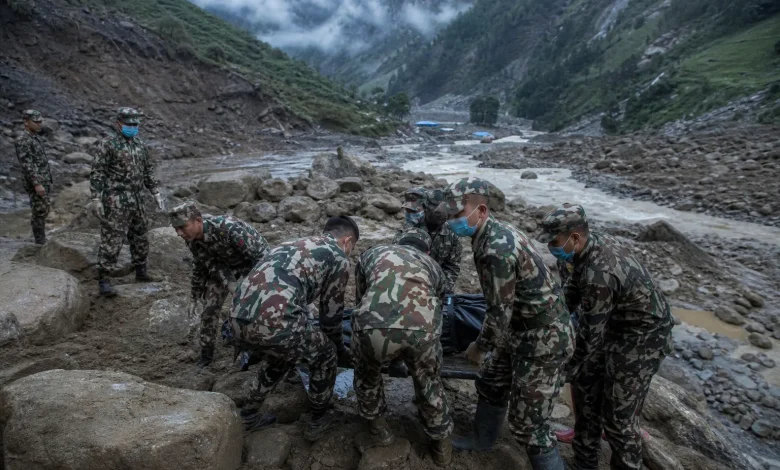
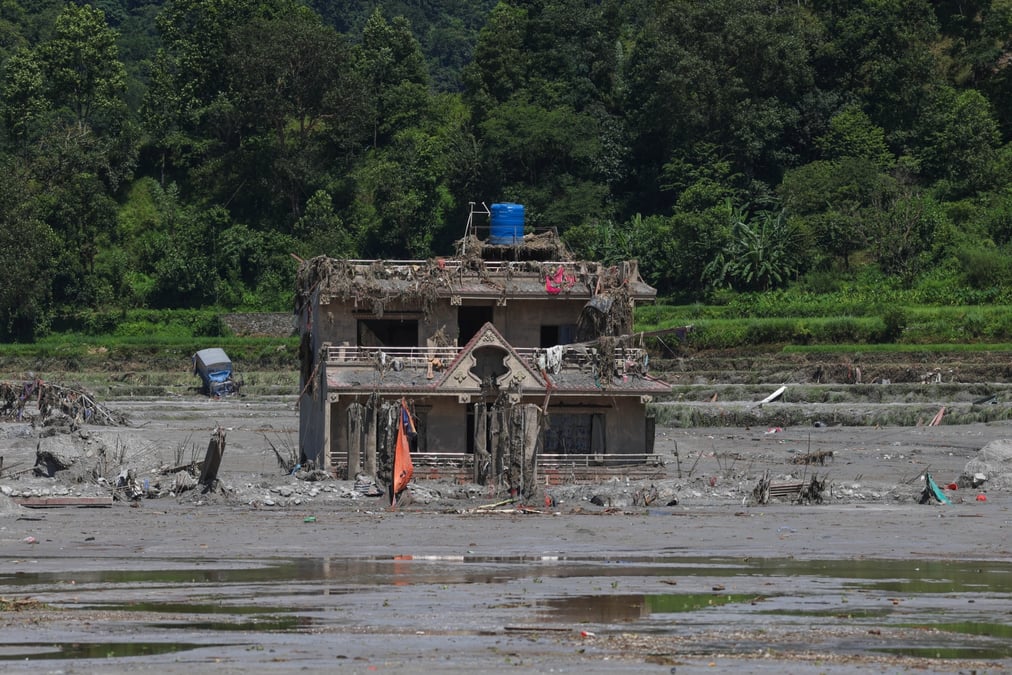
Sudden flash floods and massive mudslides have swept across wide areas along the border between Nepal and China’s Tibet region, leaving widespread destruction in villages, roads and infrastructure, killing hundreds, while more than 1,300 people remain missing, including hundreds of foreign tourists.
The disaster struck early Wednesday morning in the Rasuwa district, located north of Nepal’s capital, Kathmandu, when a massive block of ice, rock and mud collapsed into a mountain valley, turning rivers into raging torrents of muddy debris that swept away everything in their path.
What Exactly Happened?
According to an initial analysis of seismic data and satellite imagery, the disaster was not a traditional flood caused by heavy rainfall, but rather a massive glacial collapse in a remote area of the Himalayas, about 20 kilometers northeast of one of the border crossings between Nepal and China.
The U.S. Geological Survey (USGS) said in a later update that the recorded seismic energy was not caused by an earthquake, but by a glacial collapse and debris flow, followed by a catastrophic downstream flood.

According to preliminary reports, the lower part of a high-altitude glacier broke apart and fell hundreds of meters into the valley floor, displacing massive amounts of rock, ice and water, forming a temporary natural dam in the river channel, before this dam collapsed and released a devastating flood wave of water, mud and debris.
Why Were Landslides So Powerful?
Experts point out that the area where the collapse occurred is characterized by extremely steep terrain and soaring elevations, making it naturally prone to glacial and rock avalanches.
But the risk is compounded by climate change, which is causing temperatures in the Himalayas to rise faster than the global average, accelerating glacier melt and increasing their instability.
Scientists told Reuters and the BBC that human-induced climate change was likely a key factor in weakening the glacier’s structure, making it more susceptible to sudden collapse.

Glacial Lake Outburst Flood (GLOF): A Recurring Scenario in the Himalayas
This type of disaster is known as a Glacial Lake Outburst Flood (GLOF), which occurs when glacial lakes form behind natural dams of ice or debris, then suddenly burst due to accelerated melting or partial glacier collapse.
In Nepal’s recent case, it appears the glacial collapse led to the formation of a temporary lake or the expansion of an existing one, which then overflowed or burst, releasing massive amounts of water and mud into the Lhende River, which flows through the Rasuwa district.
Tragic Toll: Hundreds Dead, Thousands Missing
As of Thursday evening, August 27, 2026, authorities in Nepal and China confirmed at least 273 to 359 deaths, with expectations that the toll will rise significantly in the coming days.
In Nepal alone, more than 826 people remain missing, including 517 foreign tourists from more than 30 countries, according to the National Tourism Board.
The list of missing includes tourists from India (177), the United States (63), Australia (34), Britain (33), Canada (25), Malaysia, South Korea and other countries.
In China’s Tibet region of Gyirong, official reports said 558 people remain missing, including 260 foreigners.
Search, Rescue: Race Against Time
Search and rescue operations continue on both sides of the border, involving army, police and volunteer teams, but rugged terrain, volatile weather and difficulty accessing remote areas are complicating the mission.
Nepalese authorities said rescue teams have so far recovered more than 150 bodies, while hundreds of bodies remain buried under mud and debris.
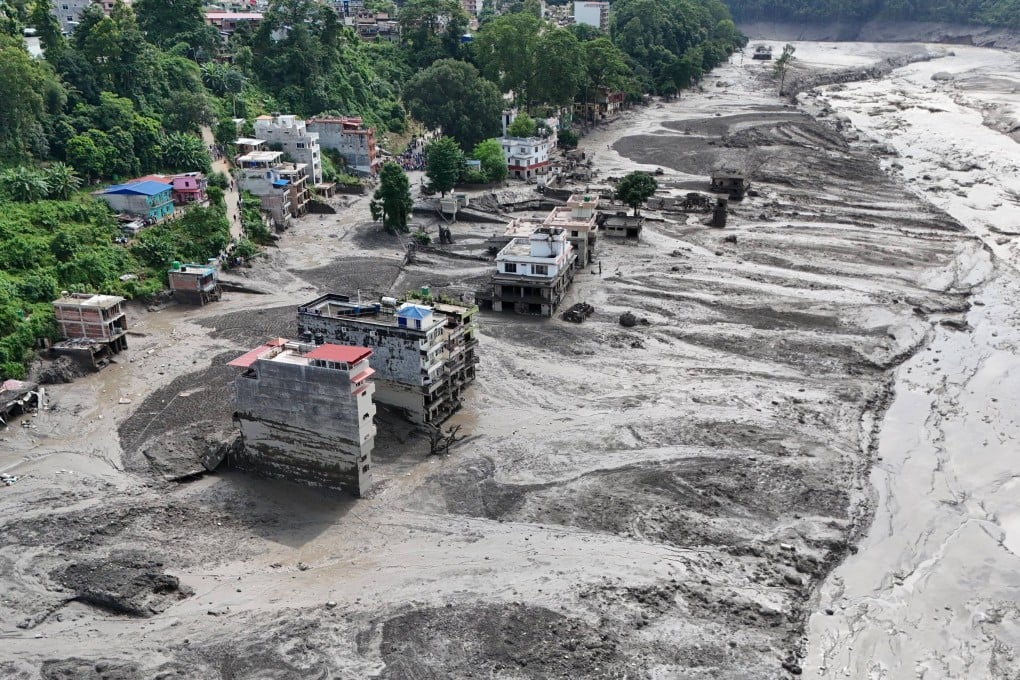
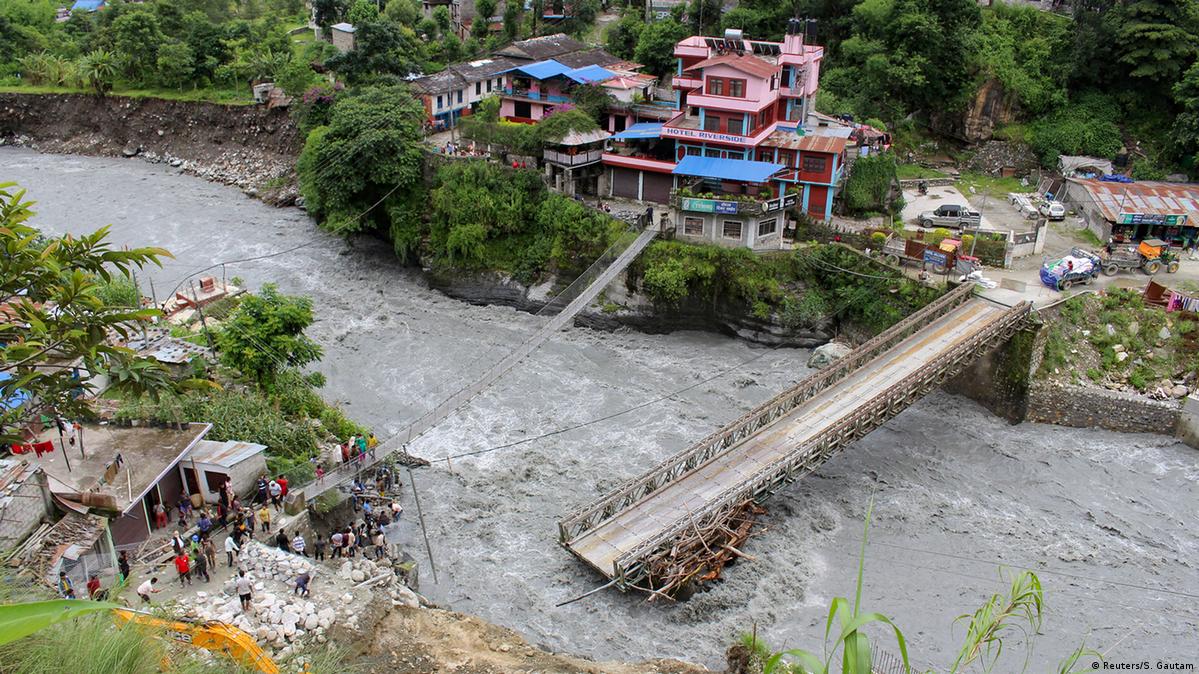
Many roads and bridges have been closed, and communications have been cut off in wide areas, hindering the delivery of aid and medical supplies to affected regions.
Why Are These Disasters Increasing in Himalayas?
The Himalayas are among the regions most affected by climate change, with temperatures rising faster than the global average, leading to:
- Accelerated glacier melt, which creates unstable glacial lakes.
- Increased instability of glacial and rocky slopes, raising the risk of landslides.
- Changing rainfall patterns, with more intense rainstorms that can weaken glacial structures.
Experts say the Himalayan region has seen an increase in the frequency and severity of GLOF disasters in recent decades, underscoring the need to strengthen early warning systems and monitor glacial lakes.
Lessons Learned: The Need for Early Warning and Better Planning
Nepal’s recent disaster highlights the urgent need for:
- Enhanced glacial monitoring systems using satellites and remote sensing devices.
- Development of predictive models to identify high-risk glacial lakes.
- Improved infrastructure in mountainous areas, including evacuation routes and emergency shelters.
- Public and tourist awareness about glacial flood risks and how to respond if they occur.
Nepal’s disaster is not just a passing flood, but the result of a complex interaction between steep mountain geology, accelerating climate change and glacier instability in one of the world’s most environmentally sensitive regions.
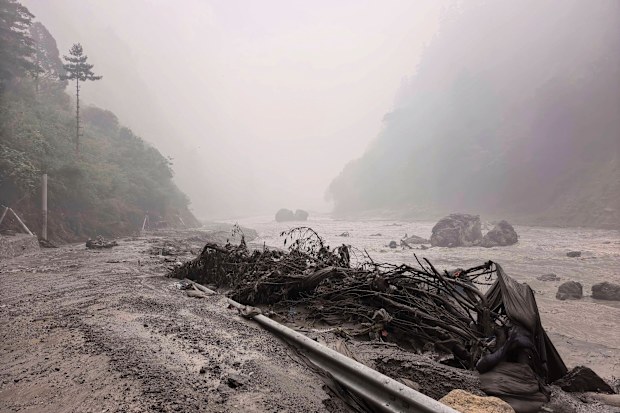
As search and rescue operations continue, this tragedy serves as a stark warning that the Himalayas are becoming more dangerous, and that similar disasters could recur unless urgent action is taken to adapt to climate change and build resilience in mountainous areas.
Related Topics:
Al-Najeelah Floodplain in Tabuk Becomes Springtime Attraction
King Faisal University Journal Collaborates with Springer Nature
Mountains, Farms of Sukhna: Springs, Archaeology, Thamudic Inscriptions
AlUla: Sanctuary for Migratory and Resident Birds