

The “Sunken Treasures” Exhibition Tells Story of Umluj Ship from Trading Voyage to Archaeological Witness

The exhibition “Sunken Treasures: Maritime Heritage of the Red Sea” is held at the Red Sea Museum in historic Jeddah. It offers a cultural and educational experience. Moreover, it blends archaeological discovery with historical narratives.
Through interactive routes, the exhibition showcases historical witnesses. These artifacts document the history of navigation and trade in the Red Sea. Furthermore, they highlight the Kingdom’s efforts to explore and preserve maritime cultural heritage.
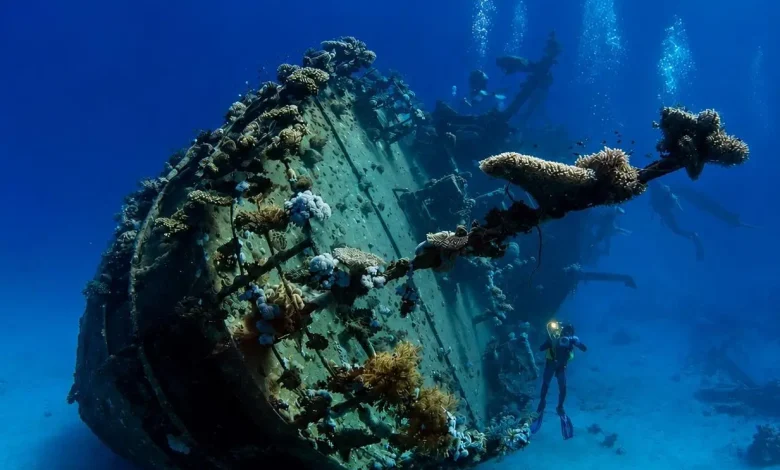
The exhibition features a section called “From Voyage to Wreck.” There, it takes visitors on a journey recording the story of the Umluj shipwreck. This is one of the most prominent submerged archaeological sites in the Red Sea.
Additionally, the merchant vessel transformed into an archaeological witness. As a result, it has preserved part of the Red Sea’s memory for over two centuries.
This section tells the story of a large merchant ship. It measured about 40 meters long. Unfortunately, it struck coral reefs off the coast of Umluj. Consequently, it came to rest on the seabed at a depth of 22 meters. This location is roughly 230 nautical miles north of Jeddah.
The wreck site was discovered in 2007. However, survey and archaeological excavation work did not begin until 2015. These efforts revealed a range of exciting finds.
Moreover, the discoveries reflect the nature of the ship’s cargo. They also document part of the maritime trade networks. Specifically, these networks linked the Red Sea with Asian ports and other regions.

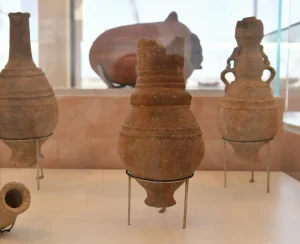
The exhibition displays several archaeological finds recovered from the site. For instance, visitors can see pottery jars and pieces of blue-and-white Chinese porcelain. These date back to the 18th and 19th centuries.
Additionally, the collection includes items that reflect daily life aboard the ship. Furthermore, it showcases the types of goods transported by merchant vessels across the Red Sea.
The section also highlights what happened to the wreck site after the ship sank. Gradually, it was buried by layers of sediment and sand. Meanwhile, coral reefs grew around the structure.
Furthermore, fish and marine organisms made their home among its remains. Consequently, it turned into a unique site. It now beautifully combines archaeological value with natural diversity.
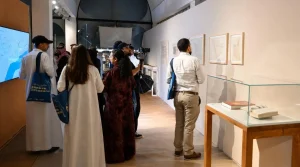
The exhibition concludes this route with an interactive experience. This display shows how the remains of a sea voyage became a submerged memory. It effectively preserves human traces and historical cargo.
Moreover, it emphasizes the importance of maritime heritage. This heritage is a crucial part of the Kingdom’s civilizational legacy. Ultimately, the exhibit raises awareness of the need to protect and conserve underwater archaeological sites for future generations.
Related Topics :
Discover Umluj: The Maldives of Saudi Arabia
Red Sea Classic Sailing Race Showcases Saudi Maritime Heritage
GASTAT: Dates Secure Highest Self-Sufficiency Rate with 119% in 2023
Red Sea International Film Festival Opens Fourth Edition in Historic Jeddah


