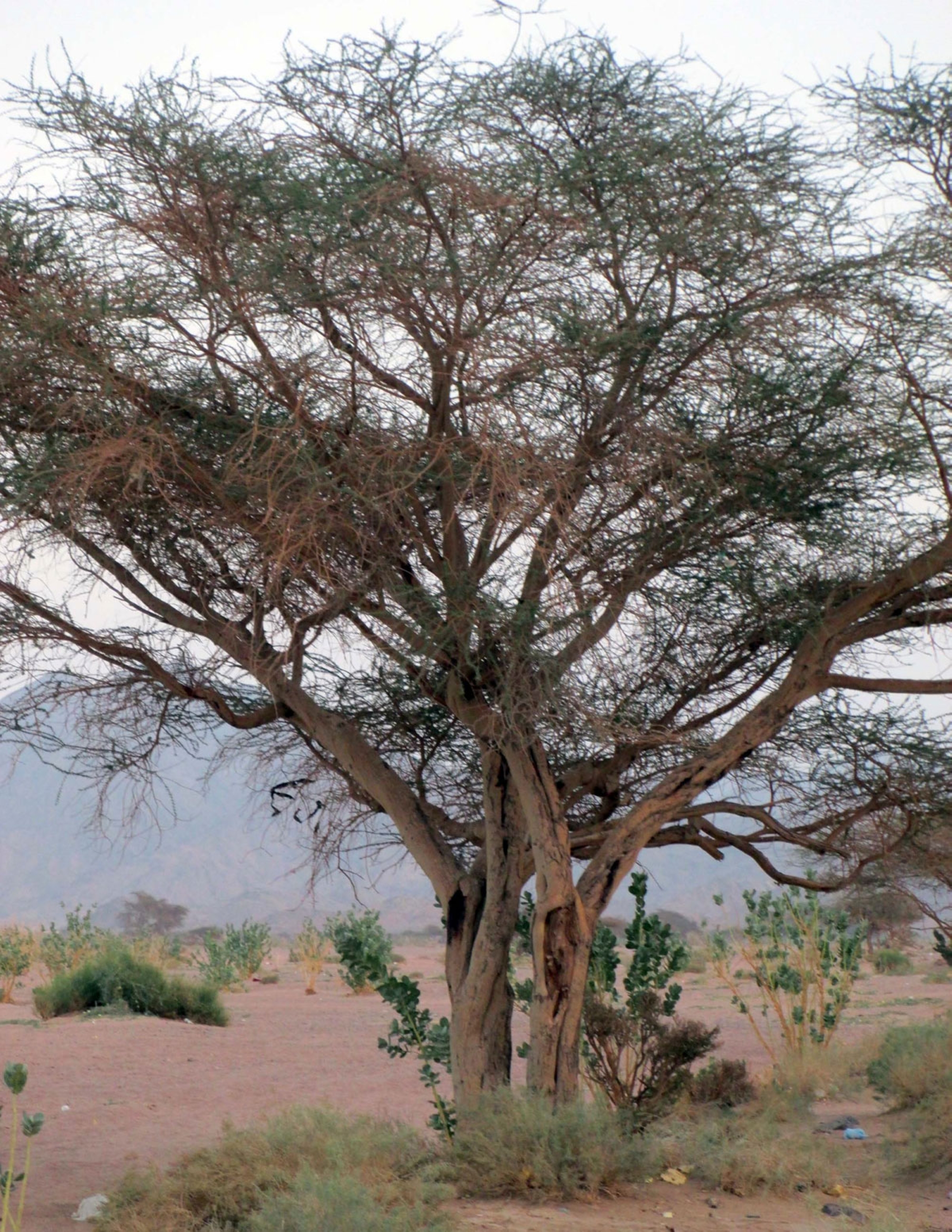
In the northern part of Umluj Governorate within Saudi Arabia’s Tabuk Region, the Acacia tortilis—commonly known as the umbrella thorn acacia—flourishes across the coastal plains. This resilient tree is a hallmark of coastal desert ecosystems, offering both ecological value and visual appeal.
Renowned for its ability to withstand extreme climatic conditions, the umbrella thorn acacia thrives near wadi estuaries, where it forms broad, shaded canopies. These natural shelters help regulate ground temperatures and offer refuge for a variety of desert wildlife.

With its twisted, reddish-brown trunks and thick, interwoven branches, the tree presents a dramatic presence in the landscape. Its silhouettes cast on the sand make it a favorite subject for photographers and a destination for nature lovers.
Beyond its beauty, this species plays a crucial role in combating desertification by anchoring soil and preventing erosion. It also supports local biodiversity by serving as a nectar source for bees, boosting the production of premium wild honey.
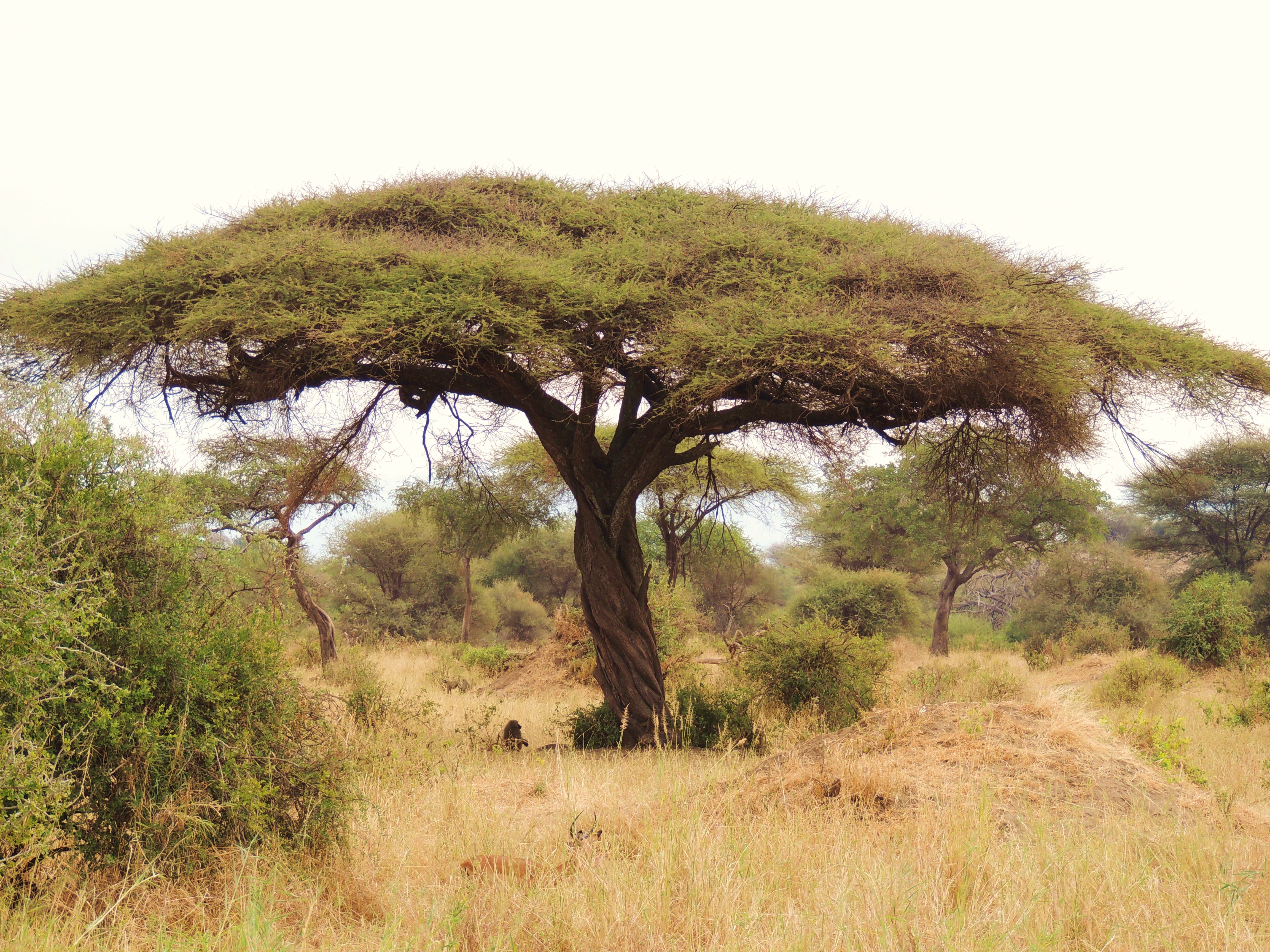
Recognizing its environmental importance, conservation efforts are underway to protect the umbrella thorn acacia. These initiatives contribute to broader goals under the Saudi Green Initiative, aiming to enhance plant diversity and strengthen the region’s ecological resilience.
Related Topics :
Heritage Event: Tabuk Celebrates Year of Handicrafts
Tabuk Boasts First Smart, Environmentally Friendly Mosque
Rock Art in Tabuk’s Harrat Testifies Saudi Arabia’s Rich Civilization