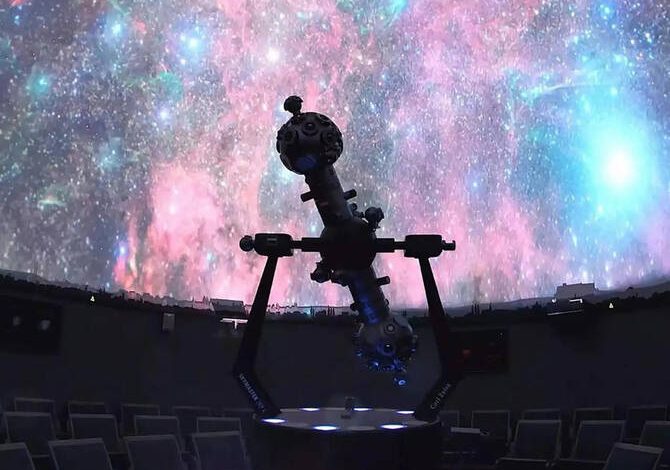
Saudi Arabia’s clear desert skies, low light pollution, and growing interest in astronomy are reinforcing the Kingdom’s standing as a year-round destination for stargazing, with August featuring one of the busiest celestial calendars of the year.
The Jeddah Astronomy Society said the month will bring several major astronomical events, including a total solar eclipse, the annual Perseid meteor shower, and a deep partial lunar eclipse.
Although the total solar eclipse on Aug. 12 will be visible in parts of Russia, Greenland, Iceland, and Spain rather than Saudi Arabia, the Kingdom is expected to witness a historic total solar eclipse on Aug. 2, 2027, with totality lasting more than six minutes in some areas.
For observers in Saudi Arabia this month, the main highlight will be the Perseid meteor shower, which is expected to peak on the night of Aug. 12-13 under favorable moonless conditions. In dark locations, viewers could see as many as 100 meteors per hour.
The month will conclude with a deep partial lunar eclipse on Aug. 27-28, during which about 93 percent of the moon’s diameter will pass into Earth’s shadow. The early stages of the eclipse will be visible from western parts of the Kingdom.
Throughout August, skywatchers will also be able to observe the prominent appearance of Venus, Saturn, Jupiter, and Mars, alongside the seasonal shift from summer constellations to winter constellations.
The calendar of events follows a series of astronomy reports published by the Saudi Press Agency in July, which highlighted Saudi Arabia’s favorable viewing conditions and rising public interest in the night sky. On July 12, the Milky Way’s spiral arm was seen glowing over the skies of Umm Al-Asafir, 60 kilometers south of Rafha.
Afaq Society for Astronomy
Berjis Al-Fulaih of the Afaq Society for Astronomy said the scene revealed the dense expanse of the Milky Way’s spiral arm across the center of the night sky, with thousands of stars and stellar clouds clearly visible.
SPA also reported that AlUla has been reviving traditional stargazing practices by introducing visitors to the celestial knowledge ancient communities once used for navigation, agriculture, and tracking the seasons, blending cultural heritage with astronomy experiences under some of the region’s darkest skies. Visitors can join guided telescope sessions and hear traditional Bedouin stories about the stars, reflecting the longstanding bond between AlUla’s people and the night sky.
The agency further documented a series of astronomical observations across the Northern Borders Region, including the appearance of the Summer Triangle, the conjunction of the moon with the bright star Antares, and the visibility of Ursa Major and Capricornus. In Rafha, SPA said skywatchers also observed a rare alignment of the Pleiades and Hyades star clusters with Mars and the star Capella.
Taken together, the reports highlight Saudi Arabia’s varied landscapes as ideal settings for astronomy throughout the year, from remote desert areas with minimal light pollution to heritage destinations where traditional star knowledge continues to be preserved and shared.
Related Topics:
AlUla, UNESCO Launch Documentary Heritage Conf. in Paris
Jewels of the World 2025 Returns to Saudi Arabia with 4 Luxury Shows
‘Visit Saudi’ Highlights Summer Season Plans at Arabian Travel Market
King Salman Reserve Highlights Green Wins for Environment Week 2025