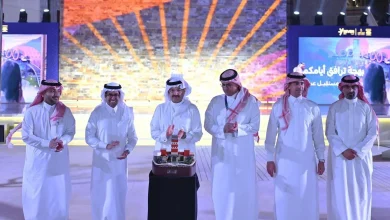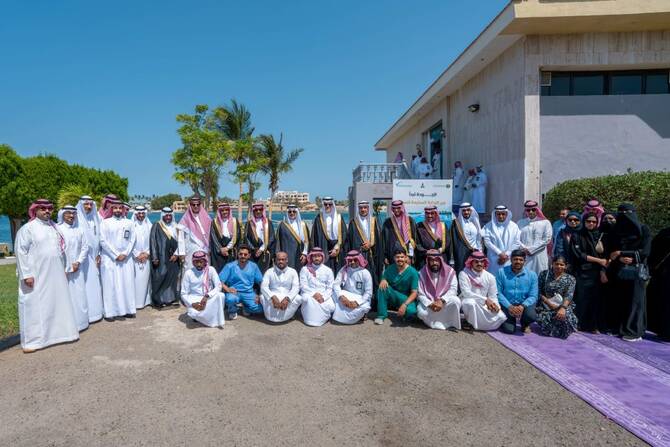
King Abdulaziz University has launched a project to rehabilitate and redevelop its fish farm in Obhur, north of Jeddah. The project is in partnership with the Ministry of Environment, Water and Agriculture.
The initiative, implemented through the ministry’s National Livestock and Fisheries Development Program, is intended to strengthen collaboration between academic and government institutions. It also aims to support the sustainable development of Saudi Arabia’s aquaculture sector.
The project was inaugurated on Tuesday in the presence of Deputy Minister of Environment, Water and Agriculture Mansour Al-Mushaiti, King Abdulaziz University President Tareef Al-Aama. Agriculture Undersecretary Suleiman Al-Khatib, and Assistant Undersecretary for Livestock and Fisheries Ali Al-Shaikhi were also present.
Turki Al-Raddadi, dean of the university’s Faculty of Marine Sciences, said the Red Sea’s unique marine environment presents significant challenges for aquaculture.
Among the main issues, he said, are persistently high and fluctuating water temperatures, which place farmed species under stress, affecting growth and productivity. He added that these conditions are becoming more severe as climate change intensifies.
Disease remains another major challenge, particularly in shrimp farming, where limited natural immunity makes stocks more vulnerable to outbreaks, Al-Raddadi said. This can cause substantial economic losses without effective monitoring and preventive measures, he added.
Moreover, he highlighted the need to develop more efficient and affordable feed and protect the genetic diversity of farmed species. He also stressed importance of breeding strains better adapted to Red Sea conditions. This will support sustainable production and improve the sector’s competitiveness.
Facility to develop locally-sourced aquaculture feed
Research at the redeveloped facility will focus on developing aquaculture feed using locally sourced and alternative ingredients. This aims to reduce production costs and reliance on imports. Other projects will target improved fish and shrimp health. This will be achieved through stronger disease prevention and reduced dependence on conventional treatments.
Furthermore, the facility will also work to preserve the genetic resources of native species and develop strains suited to the Red Sea environment. Additional efforts include improving hatchery performance and expanding local fingerling production to reduce imports and increase domestic supply.
During the launch event, attendees viewed a documentary highlighting the ministry’s aquaculture initiatives.
Afterwards, Director General of Aquaculture Fares Al-Ghamdi outlined current and future areas of cooperation between the ministry and the university. Al-Mushaiti later toured the facility.
Al-Raddadi said the redevelopment is intended to strengthen the university’s education and research capabilities in aquaculture by expanding applied research and supporting the development of new technologies.
Furthermore, the upgraded facility will provide advanced infrastructure for research on native Red Sea species, aquaculture systems and genetic improvement programs. This aims to increase the productivity of commercially important aquatic species.
Related Topics :
‘More Than a Sea’ Campaign Promotes Costal Tourism in Saudi Arabia
Farasan Islands: Explore Fascinating Tourist Attractions, Nature and Heritage
Hans Zimmer to Give Legendary Performance at Riyadh Season