

Gulf Railway: Cross-Border Network Linking Six Countries, Reshaping Transport, Trade

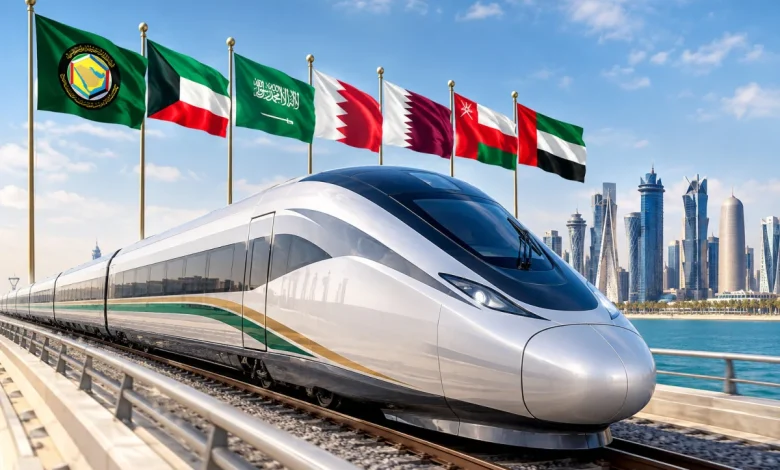
The Gulf Cooperation Council (GCC) railway project is one of the region’s largest cross-border connectivity initiatives. It aims to build a rail network spanning the six GCC states to facilitate passenger and freight movement, boost intra-regional trade, and connect economic centers, industrial zones, and Gulf ports within a single transport system.
After years of planning, studies, and regulatory preparations, the project has taken a major step forward with GCC states signing the General Railway Interconnection Agreement in Manama, Bahrain, on Sunday. The agreement provides a common framework for implementing and operating the network and for coordinating its technical and operational specifications.
The signing ceremony was held under the patronage and in the presence of Bahrain’s Crown Prince and Prime Minister, Prince Salman bin Hamad Al Khalifa, with the participation of transport and communications ministers from GCC states and GCC Secretary-General Jasem Al-Budaiwi.
The agreement establishes a general framework for coordination among member states and defines their responsibilities in implementing and operating the project. It also harmonizes technical and operational standards and safety requirements, paving the way for national networks to be connected within an integrated Gulf system.
The project’s origins date back to December 2009, when the GCC Supreme Council approved the creation of a railway linking member states, citing the importance of developing regional transport, facilitating trade and travel, supporting joint investments, and strengthening Gulf economic integration.
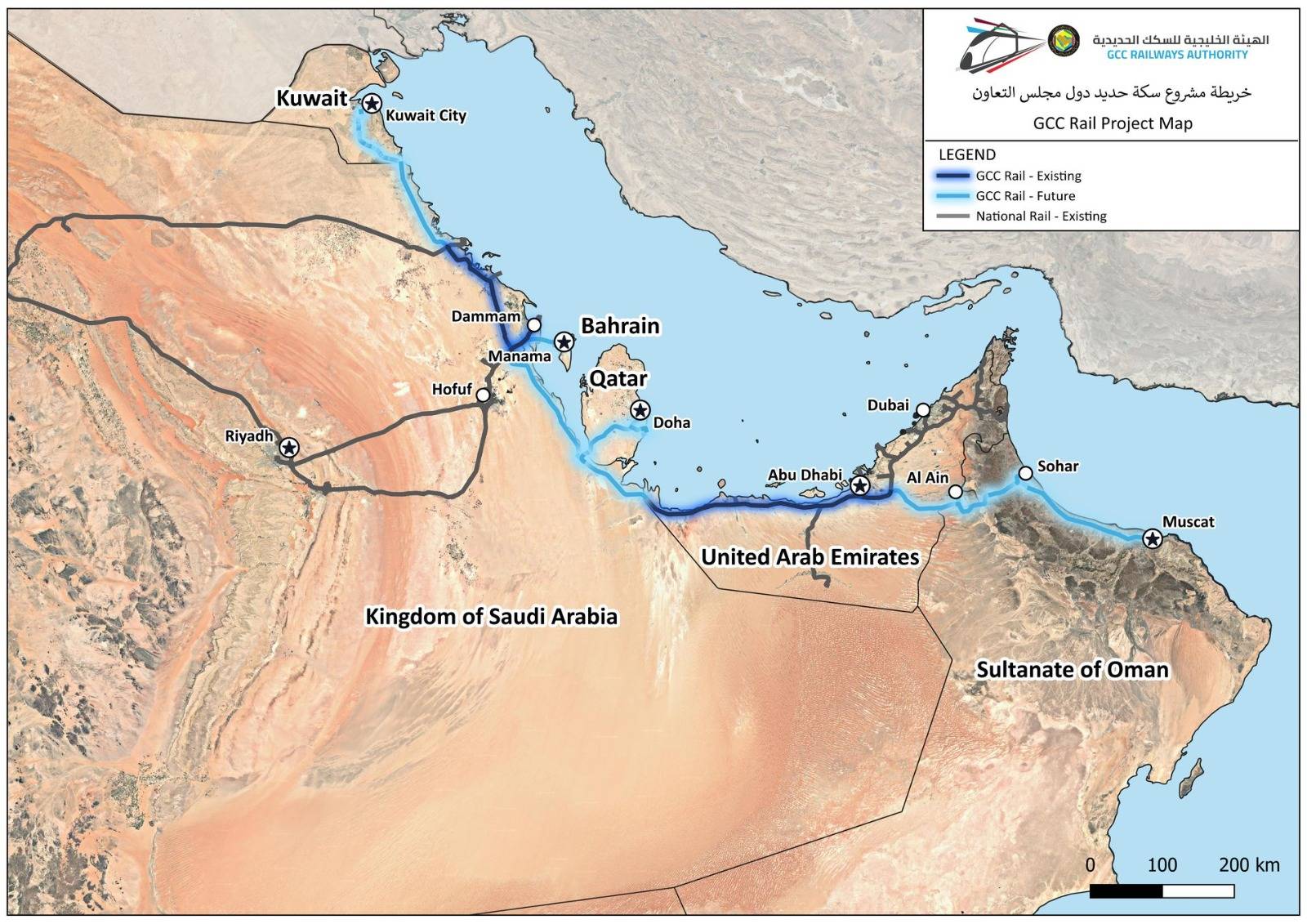
The project covers Saudi Arabia, the UAE, Kuwait, Bahrain, Qatar, and Oman. Its total route spans approximately 2,117 kilometers, with the estimated cost of core infrastructure ranging between $15.4 billion and $16 billion.
One Network Across Six Countries
The project will connect the national railway networks of GCC states within an integrated regional system, allowing trains to travel between countries without national borders obstructing transport. It will standardize technical and operational specifications and safety requirements, ensuring interoperability between networks.
The project is not limited to passenger transport. It also aims to develop freight movement, linking Gulf industrial and commercial centers, ports, and logistics zones, and enabling goods to move more efficiently between regional markets.
According to the project’s announced specifications, the passenger network is designed to accommodate trains traveling at speeds of up to 200 kilometers per hour, while freight trains are targeted to operate at speeds ranging from 80 to 120 kilometers per hour. This dual function will make the network both an intercity transport system and a logistics corridor serving trade and supply chains.
How Will Project Be Implemented?
Implementing a network spanning six countries requires coordination beyond laying railway lines. It involves regulatory, operational, and technical aspects, as well as defining each country’s responsibilities and the mechanisms for connecting national networks.
In this context, the GCC Supreme Council decided in December 2021 to establish the Gulf Railway Authority to regulate the rail transport industry in GCC states, coordinate among member states, and oversee the project’s implementation and operation as a single integrated regional line. The authority is also tasked with ensuring the compatibility and integration of national networks.
In December 2023, the GCC Ministerial Council approved December 2030 as the target date for the project’s full operation among member states. However, rail links between any two neighboring countries can begin operating as soon as the section connecting them is completed, without waiting for the entire Gulf network to be finished.
This means implementation and operation can proceed in phases, allowing member states to benefit from completed sections before the entire network is complete and to achieve gradual returns on their investment.
The General Agreement, to be signed by the states on Sunday, provides a framework for coordinating implementation and operation, harmonizing technical and operational specifications, defining national responsibilities, and strengthening the Gulf Railway Authority’s role in monitoring project phases and addressing potential obstacles.
The GCC Supreme Council had approved the project’s General Agreement in December 2025, paving the way for the necessary procedures among member states leading up to the current signing ceremony.
Bahrain, Saudi Link
The connection between Bahrain and Saudi Arabia represents one of the network’s key routes. Bahrain plans to connect to the railway network through the proposed King Hamad Causeway, which will include dedicated rail tracks alongside vehicle lanes.
The link’s importance extends beyond facilitating passenger movement between the two countries. It will give Bahrain access to the wider regional network and allow it to benefit from rail lines connecting Saudi Arabia with other GCC states, supporting freight movement, trade, and access to ports and logistics centers.
Why Project Matters Now
The new step comes at a time when regional disruptions and the challenges they have posed to maritime navigation have highlighted how dependent trade and supply chains are on specific transport routes, particularly in the Gulf and the Strait of Hormuz.
These developments have pushed regional states to seek more diverse and flexible options for moving goods and strengthening links between ports and commercial centers through land transport and railways.
In this context, Bahrain’s Minister of Transportation and Telecommunications, Sheikh Abdullah bin Ahmed Al Khalifa, said difficulties in ships transiting the Strait of Hormuz had underscored the importance of accelerating the rail-link project and enhancing integration between Gulf transport networks.
He explained that, amid challenges to maritime movement and reduced shipping activity at Khalifa bin Salman Port, Bahrain had increased its reliance on land transport and alternative ports in neighboring Gulf countries, including Saudi Arabia’s Jeddah Islamic Port, Oman’s Sohar and Duqm ports, and the UAE’s Fujairah, to transport goods by land to Bahrain.
The experience highlights the importance of an interconnected regional transport system that diversifies goods’ access routes and reduces reliance on a single mode of transport or maritime corridor. While rail is not a direct substitute for maritime transport, it complements it within a broader supply-chain system.
Economic Benefits Beyond Transport
Beyond facilitating passenger and freight movement, the Gulf network is expected to reduce the cost of transporting certain goods, improve their movement between markets, and strengthen links between industrial zones, ports, and commercial centers.
It could also support tourism and travel between GCC states, while opening investment opportunities in logistics services, warehousing, freight centers, and rail-related services. The lines may also enhance the investment and economic appeal of the areas they pass through.
As a form of mass transit, rail offers greater energy efficiency and lower emissions than some other transport modes, particularly for moving large volumes of freight and passengers, supporting GCC states’ efforts to develop more sustainable transport systems.
With the signing of the General Agreement, the project has entered a more advanced phase of coordination among member states. However, the main challenge will remain completing national infrastructure, ensuring technical and operational compatibility between networks, and adhering to established timelines to achieve the stated goal of fully operating the Gulf network by December 2030.
Related Topics:
Haramain High-Speed Railway to Accommodate 1.7 mln Passengers in Ramadan
Safe Tourism: Ensuring a Secure Travel Experience
Jeddah Transport Company Offers Exclusive Discounts on Sea Taxi Fares
Visitor Boom in Madinah Fuels Investment in Transport, Logistics


