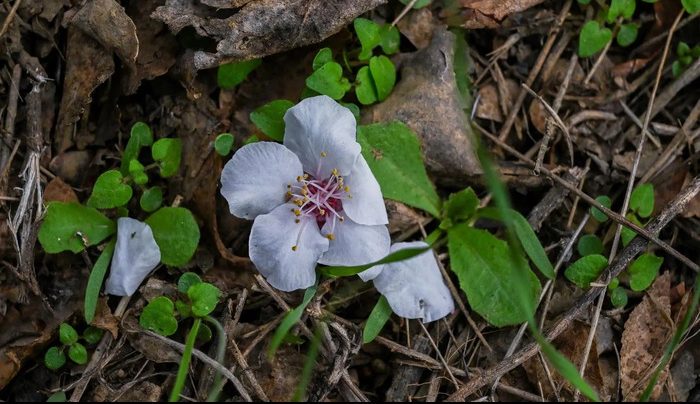
White almond blossoms sweep across the agricultural terraces of Al-Baha Region each year, transforming its mountain slopes into a breathtaking panorama that resembles scattered pearls at winter’s end.
In recent years, farmers have revived almond cultivation—an enduring symbol of cultural and social heritage passed down through generations in several governorates of the region. According to Eng. Fahd Al-Zahrani, Director of the Al-Baha branch of the Ministry of Environment, Water and Agriculture, almonds are among the most promising high-value crops for the area.
White almond
Almond trees are particularly well-suited to the mountainous terrain and terraced farms that define Al-Baha. The crop represents one of the region’s key comparative advantages, benefiting from favorable climatic conditions and diverse topography. Cultivation is widespread across Al-Baha’s governorates, contributing to agricultural diversification and long-term sustainability.
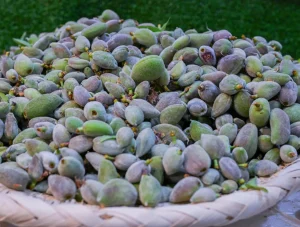
Al-Zahrani noted that almond farms in the region cover approximately 67 hectares, producing around 241 tons of green almonds and 107 tons of kernels annually. Average yields reach about 3.6 tons of green fruit per hectare. He added that the ministry provides direct support to farmers through initiatives such as the Sustainable Agricultural Rural Development Program (Saudi Reef), along with agricultural extension services aimed at encouraging investment in competitive crops.
A local farmer, speaking to the Saudi Press Agency, described almond cultivation as a demanding endeavor requiring attentive care and patience, as trees take time to bear fruit. However, almond trees are resilient, adapt to varying climates, and require relatively modest irrigation.
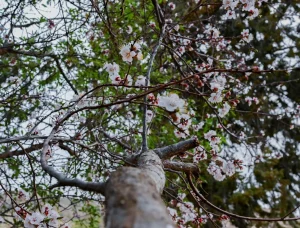
The trees begin blooming with delicate white flowers in February. Their tender fruits gradually harden, reaching full maturity by July when the shell encloses a solid kernel, known locally as “lubab.” Many people enjoy the fruit before it fully ripens, while the mature seeds are harvested once complete.
Economically, almonds provide rewarding returns, with each tree yielding approximately four to five kilograms per season.
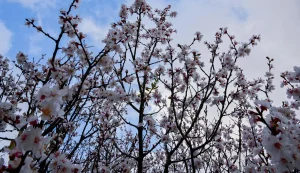
Often described as an agricultural oasis, Al-Baha boasts fertile soil, abundant water resources, and a moderate climate year-round. The almond tree, known for its durability and low water requirements, thrives naturally in this environment, with its production season aligning with the rainy period that marks the close of winter in the region’s mountains.
Related Topics:
Qatif Flower Festival Attracts Over 300,000 Visitors
Eastern Region Unveils Waterfront Sports Zone to Promote Active Lifestyles
Emir of Medina Sponsors Activities of “Flowers and Gardens Festival” in Yanbu
Al-Bisht Al-Hasawi Festival Showcases Saudi Arabia’s Rich Heritage