How Al-Hutaymah Crater in Hail Was Formed: Story of Ancient Volcano, Time’s Craftsmanship

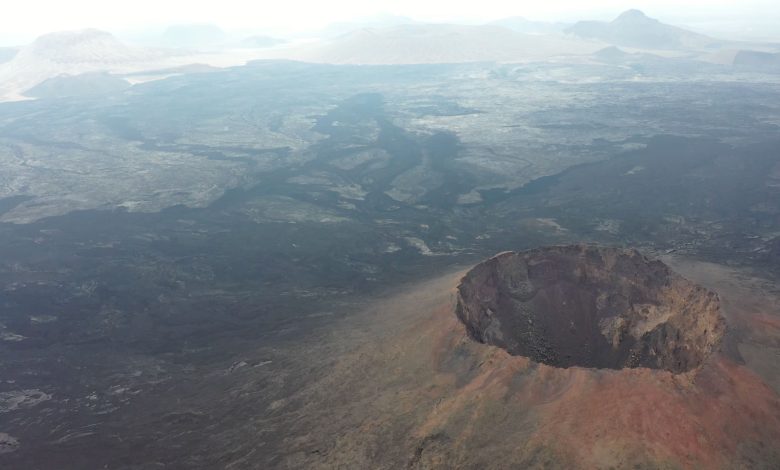
Al-Hutaymah Crater in the Hail region is one of the most prominent geological witnesses to ancient volcanic activity in the north of the Kingdom, offering both visitors and researchers an exceptional natural tableau that tells of millions of years of Earth’s transformations.
The crater was formed as a result of ancient volcanic activity that helped shape the region’s geological landscape. Dark volcanic rocks produced by lava flows surround it, while erosion and weathering have gone on to shape its natural features over thousands of years.
According to the Encyclopedia of Saudi Arabia, the crater measures 1.25 km in diameter and 110 m in depth. It features a diverse geological makeup in which volcanic rocks, natural formations and sedimentary deposits in its floor intermingle, reflecting multiple stages of natural transformation the site has undergone over time and giving it notable scientific and aesthetic value.

Exceptional Site Within Salma UNESCO Global Geopark
The crater lies east of Salma Mountain in Hail, within Salma UNESCO Global Geopark, which joined UNESCO’s Global Geoparks Network in April 2026. It is part of a volcanic field comprising more than 100 individual vent sites and at least 77 volcanoes.
These formations include broad, shallow craters known as “maars,” created by explosive interactions between magma and groundwater, as well as spherical volcanic rocks called “bombs” that were ejected during eruptions, offering a rare glimpse into how volcanic systems behave in desert regions.
Panoramic Views, Destination for Geotourism
The crater provides panoramic views of Salma Mountain and the surrounding areas, making it a unique spot for photography enthusiasts, off-road adventurers and explorers, especially during seasons of climatic moderation. It also holds value as a landmark for eco-tourism and geotourism.
The visual contrast between the dark volcanic rocks encircling the crater and the natural sediments in its floor—shaped by erosion and weathering over thousands of years—creates an exceptional natural scene that combines scientific and aesthetic value, making Al-Hutaymah an attractive destination for researchers, earth-science enthusiasts and fans of exploration and adventure.

Living Archive of Earth’s History
The crater sits within a geologically rich area containing volcanic and magmatic rocks dating back more than 740 million years, serving as an open archive of ancient Earth processes. Some of these rocks formed deep beneath the surface as part of the Arabian Shield before being exposed, making them highly valuable for understanding how continents form and evolve over time.
In this sense, Al-Hutaymah is more than just a volcanic crater; it is a window into the volcanic past of northern Arabia, a living witness to the geological transformations that shaped the region, and a promising destination for geotourism that blends exploration, education and a deeper appreciation of our planet’s history.
Related Topics:
Saudi Ardah Dance Sets New Guinness Record at Founding Day
Jeddah Hosts Photo Exhibition to Celebrate Founding Day
Saudia Showcases ‘Discover E-Zone’ Interactive Experience at Jeddah Formula E
Culinary Arts Commission Celebrates Heritage, Hospitality at Saudi Cup 2026