
Researchers at King Abdullah University of Science and Technology (KAUST) have created a new security technology. It allows digital devices to verify their identity using their own physical traits. This offers a potential alternative to passwords and security keys.
The study was published in Nature Electronics. It addresses a growing challenge in modern digital infrastructure. Today’s networks support cloud computing, artificial intelligence, and millions of connected devices. As these networks expand, security becomes crucial. It is increasingly vital to ensure every communicating device is authentic, uncompromised, and not cloned.
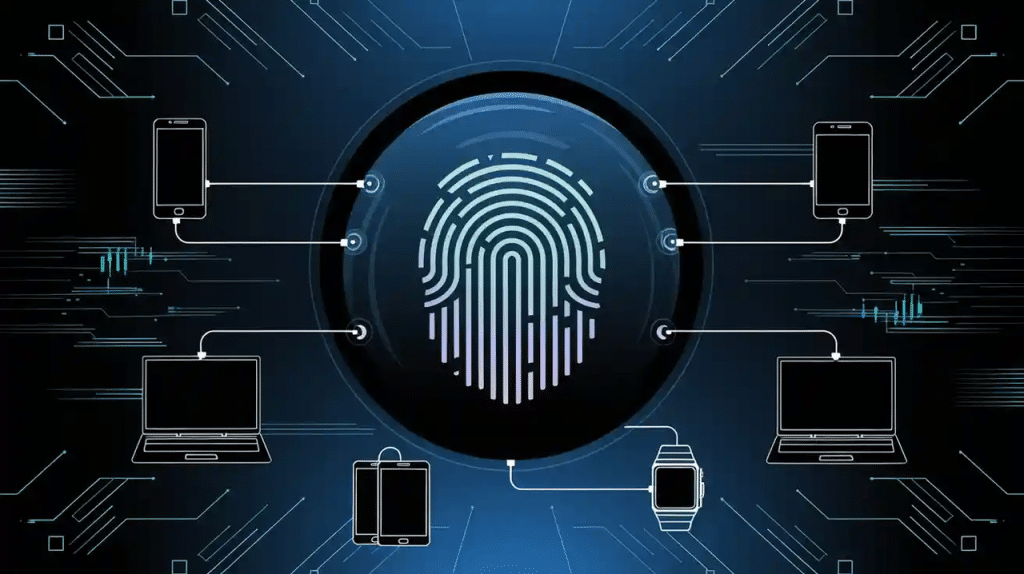
The new system uses miniature lasers to generate unique digital fingerprints. Much like a human fingerprint, each laser produces a distinct light pattern for authentication.
Moreover, researchers paired this hardware with artificial intelligence. This combination allows the system to identify and verify the light fingerprints almost instantly.
Assistant Professor Yating Wan led the research at KAUST. She explained the team’s goal: “We wanted to explore whether devices could authenticate themselves using characteristics that are inherently part of the hardware, rather than relying on stored passwords or security keys.”

KAUST
Furthermore, researchers say the technology is ideal for large-scale digital networks. In these environments, millions of devices, servers, and sensors must communicate securely. Potential applications include cloud computing platforms and AI infrastructure. It could also secure connected devices across both the industrial and consumer sectors.
Laboratory tests proved highly successful. The system authenticated devices at high speeds while consuming very little energy. These results suggest the technology could easily support future computing systems that demand both high performance and extreme efficiency.
“As artificial intelligence and cloud services continue to expand, there is growing interest in security technologies that can operate at scale,” Wan said. “This work demonstrates how photonics and AI can be combined to address that challenge.”
The research team is continuing to explore ways to integrate the technology into future computing and communications systems.
Related Topics:
Hidden Danger: Why Online Gambling Is Riskier Than Traditional One
Apple Launches Online Store in Saudi Arabia
OnTheList Launches Exclusive Members-Only Sales Platform in Saudi Arabia