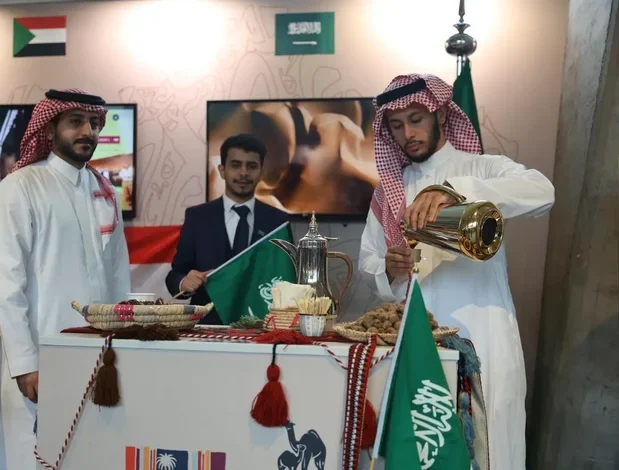
The Saudi pavilion at “Arab Week at UNESCO” invited the world to experience the rich tradition of camel culture. Through engaging exhibits, the pavilion showcased the camel’s lasting importance and its role as a cherished element of Saudi cultural heritage, deeply woven into the fabric of Saudi civilization.
Visitors interacted with the pavilion’s displays, which highlighted the camel as a cultural symbol of Saudi Arabia in Paris, embodying the nation’s heritage, authentic values, and deep-rooted history.

Over two days, UNESCO visitors from around the world explored the deep-rooted connection between camels and Saudi culture. They discovered how camels have long been woven into the fabric of community customs, traditions, and literature—including poetry, stories, and proverbs. The visitors saw firsthand how camels evolved from a vital mode of transport and supply source to an enduring cultural icon and symbol of heritage. Despite these changes, camels continue to provide food and medicine and play a vital role in sustainable practices.

The camel was chosen for the Saudi pavilion because of its unique cultural significance, leading the Ministry of Culture to designate 2024 as the “Year of the Camel.” This choice underscores the Arabian Peninsula’s deep-rooted appreciation for camels, which have long supported travel and nomadic life. Camels are celebrated in the region’s heritage through stories, poems, and traditions, making them a powerful cultural symbol, a marker of authenticity, and a key part of Saudi identity.

Camels are integral to Saudi culture, shown in ancient petroglyphs and celebrated in races, festivals, and research centers. This heritage brought the camel to Paris as a symbol of Saudi culture during “Arab Week at UNESCO.”

The Saudi pavilion participated alongside 22 other Arab nations in “Arab Week at UNESCO,” an initiative spearheaded by Saudi Arabia. This event highlights the mutual trust and respect among Arab countries and their shared commitment to promoting cultural initiatives like this one.
Related Topics :
Arab Week at UNESCO Highlights Saudi Arabia’s Role in Promoting Cultural Dialogue, Coexistence
Jeddah Historic District: 10 Years on UNESCO World Heritage List
AlUla Wellness Festival: A Haven for Self-reflection and Rejuvenation